


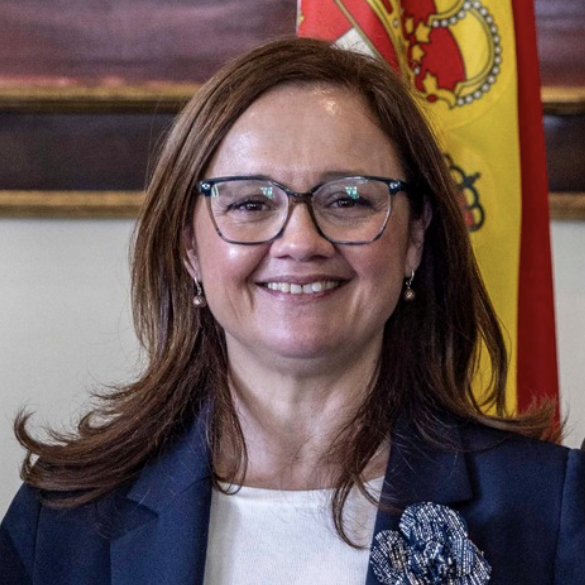
FHB interview with H.E. Ms. EMMA APARICI VÁZQUEZ DE PARGA, Spanish Ambassador to the United Kingdom
For the past few months, the FHB has had a new Honorary President, Emma Aparici, who brings with her extensive diplomatic experience and a passion for international relations. The new Spanish Ambassador to the United Kingdom talks to us about the economy, culture, tourism and special hidden gems…
ISABEL AIZPÚN
(Translated by VICKY ASCORVE HARPER)
May 2026
Congratulations on your recent appointment. Although it might be a little early to say, what are your first impressions of your new posting?
They have been fantastic. Although I already knew London and the United Kingdom, having visited both personally and professionally, it is naturally very different to do so as the Spanish Ambassador. It is a true privilege to hold this position, particularly at a time of exceptionally good understanding between our two nations.
I must express my gratitude for the wonderful welcome I have received from both the British authorities and the many friends of Spain whom I have had the good fortune to meet since my arrival.
My impression is that we are experiencing a moment of genuine understanding and synergy between our governments, with commercial exchanges more intensive than ever, and absolute closeness between our societies.
Our bilateral economic relationship is flourishing and vibrant, with trade and investment constantly on the rise. The United Kingdom is the second largest destination for our foreign direct investment.
Our companies build key infrastructure projects, they connect people, they finance our way of life, they even dress us elegantly and feed us a healthy and delicious Mediterranean diet, they generate growth, innovation and employment. In short – they build the future.
Naturally, we share the joys of tourism with Spain being the top destination for our British friends: over 18 million every year, with more than 400 flights a day – one of the densest aerial networks in the world. But above all, we share nearly a million residents between our two countries, forming a social and human fabric that underpins our bilateral relationship.
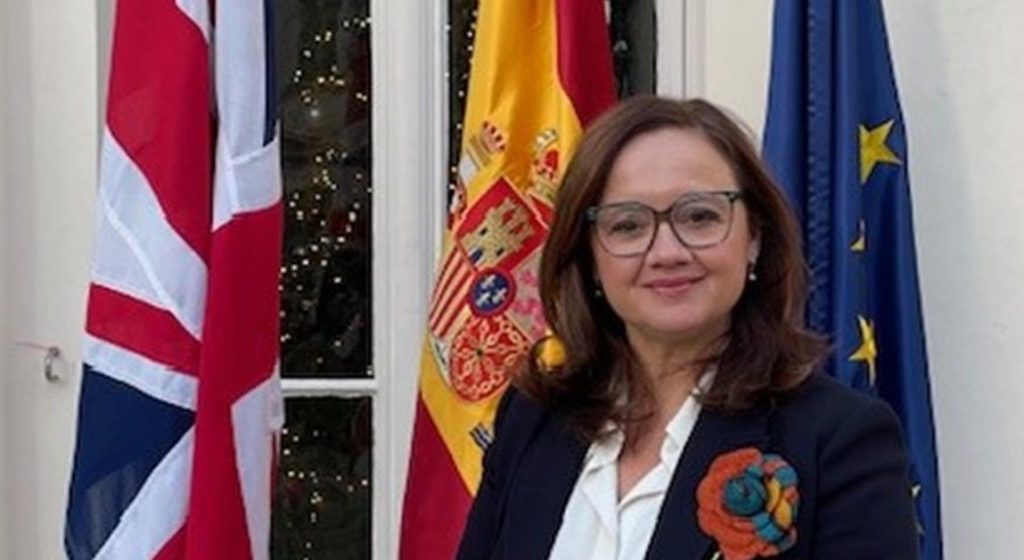
Spanish Ambassador to the United Kingdom of Great Britain and Northern Ireland
We would like to know a little more about the new Honorary President of the Fundación Hispano Británica and your career. You are a career diplomat…
That is correct. I entered the diplomatic service in 2004. I began in the cabinet of the then Minister Moratinos, working in parliamentary affairs. After that I was posted to the Permanent Mission of Spain to the United Nations in New York. This marked the beginning of a long career in multilateral diplomacy. Not only was I posted there for over five years but I later continued my career in the Ministry’s Department for the United Nations and Global Affairs, where I worked extensively on driving Spain’s candidacy for a seat on the United Nations Security Council.
Afterwards, I returned to the Minister’s cabinet, working on this occasion with Ministers García-Margallo and Dastis. I was then posted to the Spanish Embassy in Libya, although due to the difficult situation in Tripoli I was based in Tunisia, an incredible country of which I have very fond memories. While posted there, the 2018 vote of no confidence took place and I received a call from Moncloa offering me a role on President Sánchez’s team. Of course, I accepted immediately.
I wouldn’t dare give advice, least of all to an institution like the FHB, with its 40-year history and impeccable track record. What I will do is get to work straight away and give the very best of myself and this Embassy to contribute to the success of our shared goal. That objective is none other than providing civil society with the opportunity to contribute to cultural understanding and exchange between Spain and the United Kingdom, as well as fostering cultural relations between Spaniards and Britons.
Which of your postings has been the most enriching?
Without a doubt, my last position as Secretary General for Foreign Affairs at Moncloa is the one that has given me the most comprehensive and overarching view of international relations and global power dynamics. Serving as the President´s chief diplomatic adviser over the last few years has been an extraordinarily enriching experience, both personally and professionally.
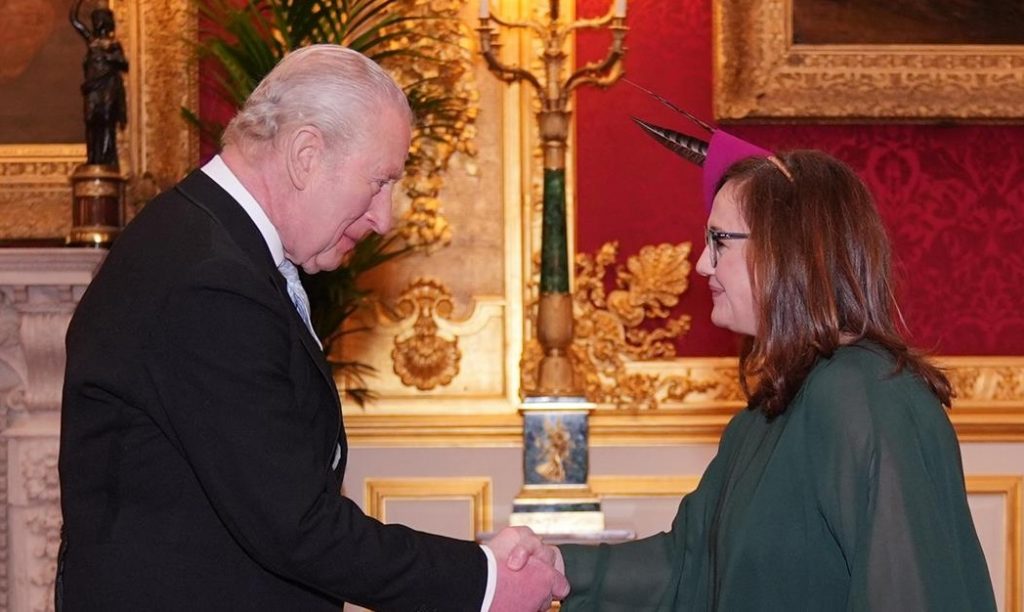
What are your priorities at the helm of the London Embassy?
I want to devote all my efforts to deepening our already magnificent bilateral relations at every level. We have an excellent framework for action, the Memorandum of Understanding signed last December between President Sánchez and Prime Minister Starmer, as well as vibrant and dynamic civil societies that form a highly valuable network of business, cultural exchanges and social relations.
Over the coming years I would like to help forge new links in less explored sectors such as artificial intelligence, the security and defence industry and the life sciences sector, while further developing well-established fields like infrastructure, finance and sustainable tourism, among others.
Naturally, I also want to contribute to the splendid Hispanic-British cultural relationship. The major exhibition dedicated to Zurbarán, opening in a few days at the National Gallery, is a testament to the deep interest in Spanish culture in this country. There are constant cultural events in which the Spanish community in the UK frequently participates and I intend to maintain a fluid and constant relationship with them.
We are fortunate to have a diverse, talented, and dynamic community here that contributes greatly to the success and progress of this country.
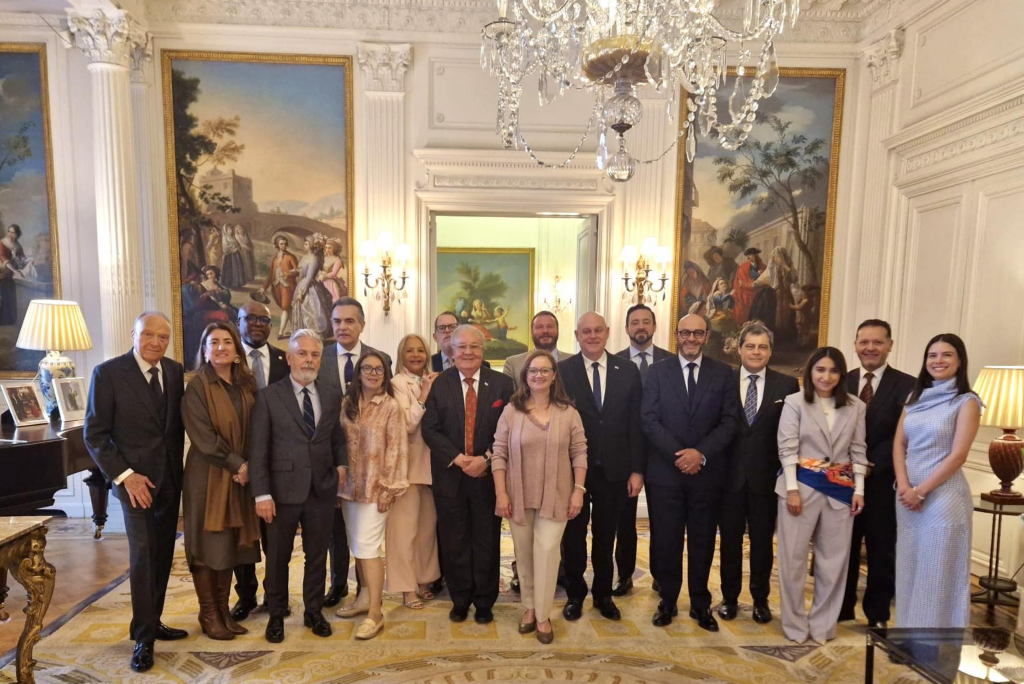
What is the current status of the formal ratification by the British Parliament of the agreement on Gibraltar reached in 2025?
In accordance with international law and UK legislation, the current draft treaty is already undergoing the parliamentary scrutiny process by both Houses ahead of its eventual ratification. As you know, the text was published on 26 February and laid before Parliament for this purpose. We hope that the agreement will be ratified in the coming months.
As a diplomat, what do you expect from this agreement?
I believe the treaty marks the beginning of a new era of coexistence and future prospects for the inhabitants of the Campo de Gibraltar. The border fence – the last wall in continental Europe – will disappear and will allow for the free movement of goods and people.
It also opens a new chapter in the already excellent relations between Spain and the United Kingdom, enabling us to further deepen our close cooperation.
What are your impressions of the Spanish community in the United Kingdom?
We have a vibrant and dynamic community of over 200,000 Spanish citizens residing in the country. I have been able to attend various meetings and events with prominent members of the community, witnessing first-hand the great Spanish talent living here. Our compatriots in the UK work side by side with their British colleagues, excelling in an enormously diverse range of sectors. We find Spaniards doing great things in fields as varied as academia and business, in major London restaurants or at particle accelerators, in leading museums or at the Botanic Gardens… in short, it is a pleasure to meet them and see how they are thriving in this country. I hope to have the opportunity to meet many more of my compatriots over the coming years.
It was especially moving just a few days ago, on International Women’s Day, to meet the highly talented Dr Isabel Quiroga, whose team was responsible for the first birth of a baby following a uterus transplant from a deceased donor.
the Ambassador Emma Aparici and Dr. Isabel Quiroga, Consultant Transplant and Endocrine Surgeon at the Oxford Transplant Centre
(March 2026) IV International Women’s Day Networking Spanish Chamber of Commerce in the UK Reception
at the Spanish Ambassador’s Residence in London
Do you have specific projects in mind for your engagement with the Spanish community?
I have several upcoming visits that I am particularly looking forward to: I want to visit the Miguel de Cervantes Centre for the Elderly and the Vicente Cañada Blanch Spanish School as soon as possible. They are two pillars of our community, located in Portobello, a neighbourhood that is deeply linked to Spanish and Portuguese migration.
I also intend to maintain a constant dialogue with the Councils of Spanish Residents (CRE) in the United Kingdom and I hope to visit the Consulates in Manchester and Edinburgh as soon as possible, which, alongside London, deal directly with our citizens.
Reflecting just how much of a priority our bilateral relationship is, we have a vast administrative presence deployed here, with twelve Attaché Offices and two Cervantes Institutes, in addition to the three Consulates-General. Both the consulates and the offices most directly linked to the Spanish community here, such as Labour or Education, do excellent work. Labour procedures linked to national insurance, or safeguarding Spanish as a heritage language through the Spanish Language and Culture Classrooms (ALCE), are prime examples of this.
We want to serve our community as best we can, and furthermore, I want the Embassy to be open to them. I want to offer the ideal setting for British and Spanish people to debate, negotiate, cooperate and work together in a place they should consider their home.
Moreover, I want them to feel proud of us and of their country. It is also important to highlight the cultural promotion work carried out by both our Cultural Office and the Instituto Cervantes, showcasing the very best of our culture to the British public. Among the many scheduled activities, we will certainly take special pride this year in the stunning Zurbarán exhibition hosted by the National Gallery, which we are anticipating with great excitement.
Have you seen enough of London yet to be able to recommend a specific spot or location to us?
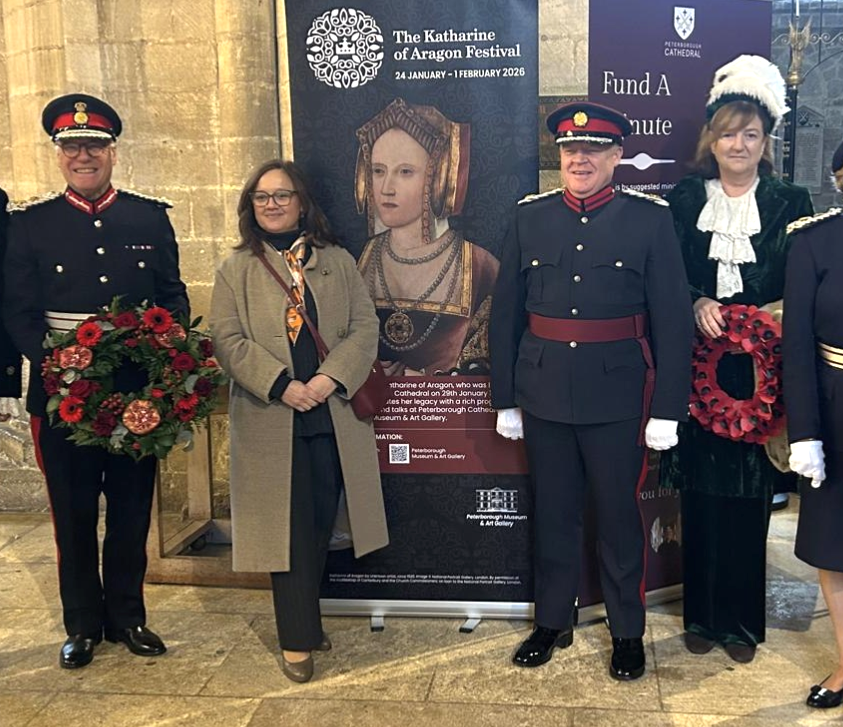
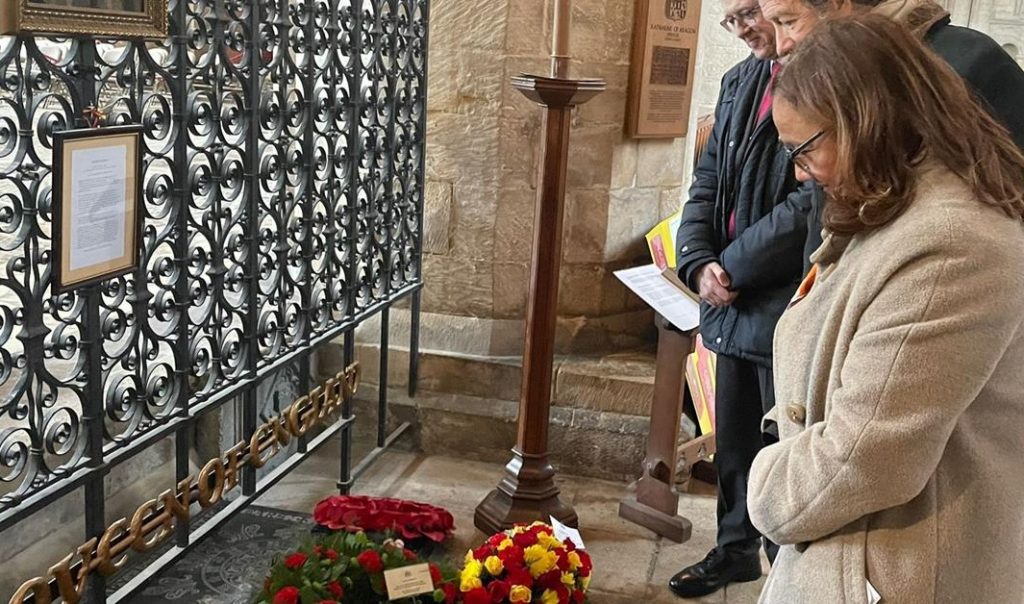
It is still early days, but I have absolutely loved the Royal Botanic Gardens, Kew, for instance, where we have an outstanding Spanish horticulturist, Carlos Magdalena, who has been responsible for saving several tropical plants from extinction. I also loved Peterborough, which I hadn’t visited before. I recently had the honour of attending the annual ceremony at its cathedral paying tribute to Queen Catherine of Aragon, who is dearly remembered there.
As Honorary President of the Foundation, what advice would you like to give it for the near future?
I wouldn’t dare give advice, least of all to an institution like the FHB, with its 40-year history and impeccable track record. What I will do is get to work straight away and give the very best of myself and this Embassy to contribute to the success of our shared goal. That objective is none other than providing civil society with the opportunity to contribute to cultural understanding and exchange between Spain and the United Kingdom, as well as fostering cultural relations between Spaniards and Britons.